So, the 138th China Import and Export Fair coming up in 2025 is really a big deal — it's a key spot to check out the latest tech breakthroughs, especially when it comes to geospatial surveying and mapping. One of the cool trends they’ll be highlighting is how Gnss Receiver Imu tech is evolving. As a company leading the way in this space, Shanghai Apekstool (or APEKS) is super committed to pushing the envelope with innovative solutions that boost accuracy and make surveying tools more efficient, whether it’s GNSS/GPS systems, total stations, or other surveying gear. By integrating high-end GNSS Receiver IMU systems into their lineup, APEKS wants to take precision mapping and surveying to the next level — making sure pros have reliable, top-notch tools at their fingertips. This event isn’t just about showing off cool tech; it's also a great chance for experts and enthusiasts to connect, share ideas, and help advance surveying tech not just in China but around the world.

Innovative GNSS Receiver Technology: Enhancements in Accuracy and Reliability
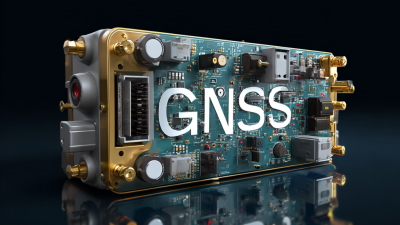
So, at the 138th China Import and Export Fair in 2025, everyone's talking about cutting-edge GNSS receiver tech—especially how it's getting way more accurate and reliable. Industry insiders say that the Global Gnss market is probably gonna hit $100 billion by 2026, mainly because more and more sectors like agriculture, construction, and transportation need super precise geospatial data. Companies are pouring money into making GNSS receivers better, adding fancy algorithms and supporting multiple frequencies to get down to centimeter-level accuracy—that’s pretty wild.
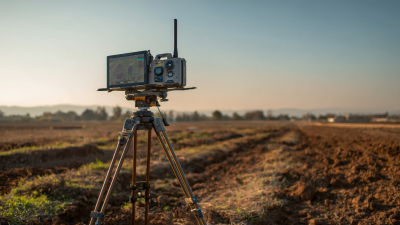
Here at Shanghai Apekstool (or APEKS, if you like), we're pretty excited about these developments. We’re leading the charge with top-notch GNSS and GPS systems that are tailored for surveyors and mappers who need their tools to keep up with today's demands. Our focus on reliability and getting accurate results shows in our lineup, which includes everything from total stations and levels to smart surveying software that helps speed things up. Recent research even suggests that combining inertial measurement units (IMUs) with GNSS can boost positioning accuracy by up to 95% in real-time, which is a game-changer. This combo helps cut down errors, especially when signals get obstructed, taking geospatial measurements to the next level across a bunch of different applications.
Innovative Trends in Gnss Receiver Imu Technology at the 138th China Import and Export Fair 2025 - Innovative GNSS Receiver Technology: Enhancements in Accuracy and Reliability
| Feature | Description | Value |
| Signal Processing | Advanced algorithms to improve accuracy | Up to 99.9% accuracy |
| Integration with IMU | Seamless integration for enhanced navigation | Real-time data synchronization |
| Multi-Constellation Support | Support for GPS, GLONASS, Galileo, and BeiDou | Improved global coverage |
| Size and Weight | Compact design for portability | Weight under 500 grams |
| Durability | Rugged construction for field use | IP67 rating |
| Battery Life | Long-lasting performance for extended use | Up to 24 hours |
IMU Integration in GNSS Receivers: Synergistic Advances for Precision Navigation
You know, the way Inertial Measurement Units (or IMUs) are being integrated into Global Navigation Satellite System (GNSS) receivers is pretty exciting – it's like we're stepping into a whole new level of precise navigation. This cool trend was actually a big highlight at the 138th China Import and Export Fair 2025, and it really shows how combining these technologies can lead to some awesome advancements. When you add IMUs to GNSS receivers, users get a noticeable boost in accuracy and reliability — especially in tricky environments where satellite signals might be weak or blocked.
What’s cool about IMUs is that they provide real-time info about motion, which means Gnss Devices can keep tracking your position even if the satellite signals cut out for a bit. That’s a game-changer for things like self-driving cars and drones, where keeping track of your position really matters. Plus, when the data from GNSS and IMUs are combined, smart algorithms can predict and fix errors on the fly, helping navigation to perform smoothly even during dynamic movements. As this tech keeps evolving, I honestly believe it’s going to totally change the way we think about navigation systems — making them way more resilient and ready for real-life, messy situations.
Market Insights: Growth Projections for GNSS Receiver and IMU Technologies by 2030
Hey, so it looks like GNSS receivers and IMU tech are really on the rise. Experts are estimating that by 2030, the market could hit around $4.71 billion. A big reason for this? People are needing much more accurate navigation and positioning—whether it’s for transportation, farming, or city planning. As industries chase after better tech, combining GNSS systems with Inertial Measurement Units (IMUs) is becoming pretty much essential if you want reliable and precise location data.
And it doesn’t stop there—LiDAR technology is also showing some serious growth. By 2025, the global LiDAR market is expected to be worth about $2.99 billion, with some solid projections heading into 2030. Over in the U.S., the LiDAR market alone could hit roughly $679 million in 2024, with an eye-popping growth rate of almost 24% each year from 2025 to 2030. These trends really highlight how GNSS and related tech are interconnected with new and exciting sectors, pushing forward innovation and smarter ways to collect and use geospatial data. As these technologies keep evolving, they’re set to shake things up across multiple industries—giving us better insights and helping us make smarter decisions down the road.
Key Players: Leading Companies Showcasing Innovations at the 138th Guangzhou Fair
So, at this year's 138th China Import and Export Fair in 2025, some of the biggest companies are really showing off their latest and greatest in GNSS receiver IMU tech. It’s pretty exciting stuff—these new advancements are all about making navigation way more accurate and reliable, whether you're talking cars, space stuff, or smart gadgets you use every day. The big players are really pushing the envelope here, showing how combining satellite signals with inertial measurement units can deliver performance that’s honestly groundbreaking. It’s all in response to that growing need for pinpoint precision in real-time applications.
You’ll find some well-known tech giants there too, unveiling their cutting-edge solutions that feature sleeker designs and smarter algorithms. Their booths highlight recent breakthroughs in how they process signals and fuse sensor data—key especially when you're dealing with tricky urban environments or bad weather. As the event goes on, you can expect some pretty cool presentations and live demos from top-tier companies, all showcasing just how much GNSS receiver IMU tech could revolutionize navigation and automation in the near future.
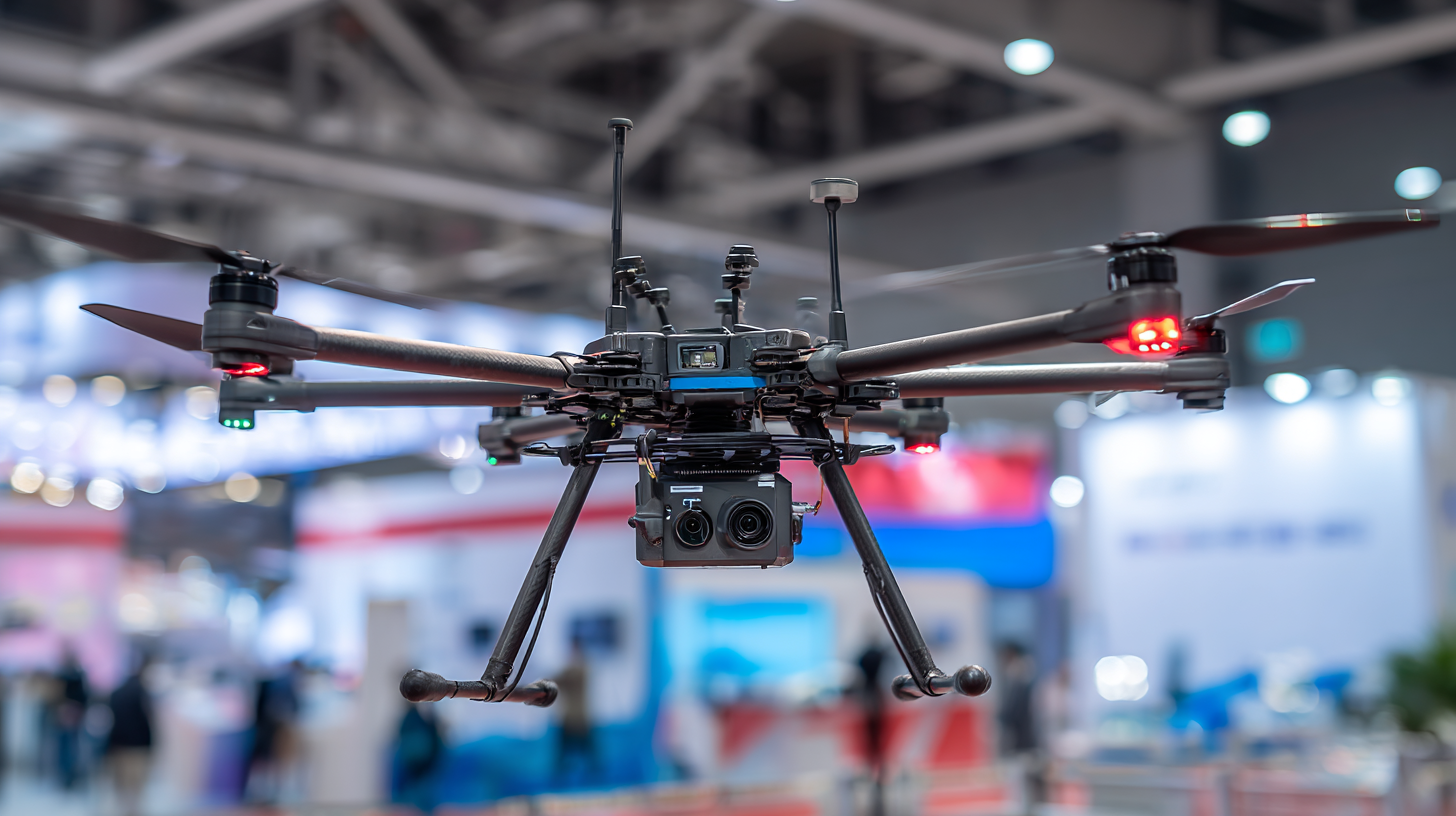
Emerging Applications: GNSS-Enhanced IMUs in Autonomous Vehicles and Drones
You know, combining GNSS (that’s Global Navigation Satellite System) tech with Inertial Measurement Units (IMUs) is honestly a game-changer when it comes to making autonomous vehicles and drones more accurate and trustworthy. I read in a recent report by MarketsandMarkets that the GNSS market is expected to jump from about $100 billion back in 2020 to over $150 billion by 2025. Most of this growth seems to be driven by uses in transportation and logistics—makes sense, right? The really cool part? When you sync GNSS with IMUs, you get way better position tracking, which is absolutely vital for autonomous systems to navigate precisely.
We're seeing all sorts of new applications popping up, especially in the realm of self-driving cars. They're starting to use GNSS-enhanced IMUs to stay on track even in tricky environments where GPS signals might get blocked or jammed. According to a study by IEEE, mixing these two technologies can boost location accuracy down to just a few centimeters—that's huge for real-time decisions in vehicles. And it’s not just cars—drones are jumping on this bandwagon too. It’s estimated that by 2025, about 70% of drones will be using GNSS-IMU systems. This really ramps up their reliability, whether they’re delivering packages, doing survey work, or inspecting stuff. As things keep evolving quickly, the combo of GNSS and IMUs is opening up all kinds of exciting new possibilities for autonomous tech—that’s pretty awesome, don’t you think?
Future Trends: The Impact of AI on GNSS Receiver and IMU Technology Development
You know, the way artificial intelligence (AI) is starting to play a bigger role in GNSS receivers and IMU tech? It’s honestly a game-changer for navigation and positioning. At the 138th China Import and Export Fair in 2025, folks are showing off how AI can boost data processing, making location fixes quicker and way more accurate. Thanks to machine learning, these receivers can now better lock onto signals and track them—even in tricky spots like city canyons where signals bounce around, causing multipath issues. It’s like systems are getting smarter and more adaptable, giving reliable data no matter the environment.

And AI isn’t stopping there. It’s also helping to fine-tune inertial measurement units (IMUs). Using clever sensor fusion techniques, AI can crunch data from different sources on the fly, seriously upping the game in terms of motion tracking and navigation accuracy. This combo of GNSS and IMUs makes it possible to navigate seamlessly, whether it’s self-driving cars or drones flying around—they’re both super sensitive to precision. As the tech moves forward, I bet we’ll see even more cool innovations, with AI-driven systems pushing the performance further, bringing down costs, and opening up new possibilities for GNSS and IMU tech.
FAQS
: GNSS receiver IMU technology is showcased to enhance navigation accuracy and reliability across various sectors, addressing the increasing demand for precision in real-time applications.
Industries such as automotive, aerospace, and smart devices are benefiting from these advancements, which aim to improve navigation performance.
Major innovations include improved algorithms, miniaturized components, and breakthroughs in signal processing and sensor fusion techniques.
The integration enhances navigation capabilities in challenging environments, allowing for more accurate position tracking essential for autonomous systems.
The GNSS market is projected to grow from $100 billion in 2020 to over $150 billion by 2025, significantly driven by transportation and logistics applications.
Approximately 70% of drones are expected to utilize GNSS-IMU systems by 2025, improving operational reliability for tasks such as delivery, surveying, and inspection.
Attendees can expect insightful presentations and live demonstrations showcasing the transformative potential of GNSS receiver IMU technology.
This technology addresses challenges such as obstructed GPS signals in urban settings, providing enhanced navigation capabilities.
Increased location accuracy to within centimeters is essential for real-time decision-making, ensuring safety and efficiency in navigation.
Advanced signal processing is crucial for improving the accuracy and reliability of navigation systems, especially in adverse weather conditions.
Conclusion
Hey, have you heard about the upcoming 138th China Import and Export Fair in 2025? It’s gonna be pretty exciting—they’ll be showcasing some really cutting-edge stuff in GNSS receiver IMU tech. The focus is on making these systems more accurate and reliable, which is pretty crucial when it comes to precision navigation. What’s cool is how they’re now integrating IMUs directly into GNSS receivers, creating a kind of perfect combo that really boosts how well these positioning systems work. Experts are saying that by around 2030, we should see some serious growth in both GNSS receiver and IMU tech—especially with new uses popping up in autonomous vehicles and drones. It’s like the future is already knocking on the door! You’ll also see companies like Shanghai Apekstool (APEKS) showing off their latest innovations in geospatial surveying and mapping. Plus, AI’s role in pushing forward GNSS/IMU tech is going to be a hot topic, suggesting that combined systems will only get better at navigation and mapping in the near future. It’s an exciting time for sure!